Introduction
A Shaker style kitchen is defined by simple cabinet doors with a framed outer section and a flat, recessed centre panel. The design is clean, balanced and practical, without excessive decoration.
Although the style has historical roots, Shaker kitchens can look equally at home in a country cottage, a Victorian property, a modern apartment or a new open plan extension.
The appearance of a Shaker kitchen can be changed significantly through the choice of colour, worktop, handles, flooring and accessories. This flexibility is one of the reasons the style has remained popular while other kitchen trends have come and gone.
A traditional Shaker kitchen might use warm painted cabinetry, timber worktops and cup handles. A modern Shaker kitchen could combine slim framed doors, quartz worktops, integrated appliances and minimal handles. Both are based on the same recognisable cabinet design.
Where did the Shaker kitchen style come from?
Shaker design takes its name from a religious community known as the Shakers. The group became associated with furniture and interiors that prioritised usefulness, quality and simplicity.
Rather than adding decoration purely for appearance, Shaker furniture was designed to perform a clear purpose. Pieces were usually well proportioned, carefully constructed and free from unnecessary ornament. These principles can still be seen in Shaker style kitchens today.
The cabinet doors are simple, the layouts are organised and the overall design is intended to feel calm and practical. Modern manufacturers have adapted the original concept using a wider range of materials, colours and production methods, but the underlying appearance remains recognisable.
What do Shaker kitchen cabinets look like?
Shaker kitchen cabinets normally have doors made from five visual sections.
There are two vertical sections, two horizontal sections and a recessed centre panel. Together, these create the simple framed appearance associated with Shaker kitchen design.
The width and depth of the frame can vary. A classic Shaker door often has a wider frame and a clearly recessed central panel. A slim Shaker door uses narrower framing to create a lighter and more contemporary appearance.
Some designs include subtle grooves or a visible wood grain, while others have a smooth painted finish. The exact construction will depend on the manufacturer, material and price range.
The defining feature is not the colour or the handle. It is the clean framed shape of the cupboard and drawer fronts.
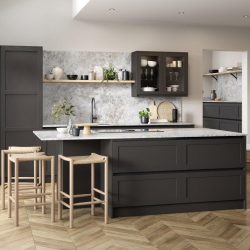
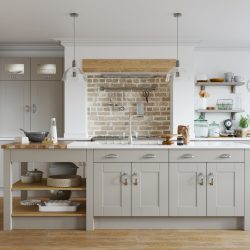
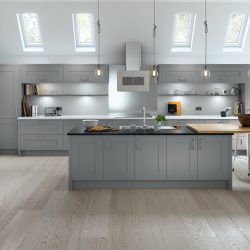
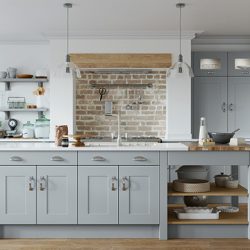
The main features of a Shaker kitchen
While every kitchen can be personalised, most Shaker style kitchens share several common characteristics.
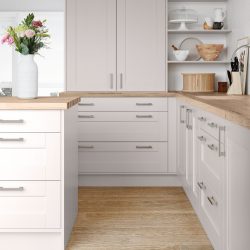
Framed cupboard doors: Shaker kitchen cupboards have a simple rectangular frame surrounding a recessed centre panel. This gives the cabinetry more depth than a completely flat door without making it appear overly decorative.
Clean lines: The design uses straight edges, balanced proportions and simple shapes. Decorative mouldings are usually kept to a minimum.
Practical storage: Shaker kitchen units can be combined with deep drawers, tall cupboards, larder storage, corner solutions and integrated bins. This allows the traditional looking door style to work with modern storage systems.
A balanced layout: The repeated frames on the cabinet doors create a sense of order throughout the room. This can help a busy kitchen feel calmer and more organised.
Flexible finishes: Shaker kitchen cabinets are available in painted, timber effect, wood veneer and natural timber finishes. This makes the style suitable for a wide range of budgets and properties.
Visible or discreet handles: Knobs, cup handles and traditional pull handles can create a more classic appearance. Slim bar handles, small edge pulls or handleless rail systems can give the same cabinetry a more modern character.
Traditional and modern Shaker kitchen styles: A traditional Shaker kitchen often uses warmer colours, natural materials and more visible decorative details.
Popular choices include cream, sage green, warm grey, navy and natural timber. Cup handles, round knobs, Belfast sinks and timber or stone effect worktops can strengthen the classic appearance.
Traditional Shaker kitchen units may also be combined with glazed wall cupboards, open shelving, decorative cornices or a freestanding dresser.
This approach works particularly well in cottages, farmhouses and period properties. It can also introduce warmth and character into a newer home.
The design does not need to feel old fashioned. Keeping the colour palette restrained and limiting decorative accessories can create a traditional kitchen that still feels fresh.
Modern Shaker kitchen design
A modern Shaker kitchen retains the framed cabinet door but simplifies the rest of the room.
Slim Shaker doors are particularly effective in contemporary spaces because the narrower frame creates a cleaner and less visually heavy appearance.
Modern designs may include integrated appliances, quartz worktops, large drawers, streamlined lighting and simple handles. Dark green, deep blue, charcoal, black and warm neutral colours can create a strong architectural look.
Handleless Shaker kitchen cupboards are another option. These combine the character of a framed door with the clean appearance normally associated with contemporary cabinetry.
A modern Shaker kitchen can be a useful middle ground for homeowners who find flat cabinet doors too plain but do not want a heavily traditional design.
Choosing colours for a Shaker kitchen
Colour has a significant effect on how Shaker kitchen cabinets look within a room.
The framed design creates natural areas of light and shadow, which can make even a simple colour feel more detailed.
White Shaker kitchens
White can make a kitchen feel bright, clean and spacious. It works particularly well in small rooms or kitchens with limited natural light.
Pure white can feel crisp and contemporary, while softer off white shades create a warmer result.
To prevent the room from feeling clinical, white Shaker kitchen units can be paired with timber flooring, warm metallic handles or a patterned splashback.
Grey Shaker kitchens
Grey remains a flexible option because it works with many different worktops, floors and wall colours.
Pale grey can create a soft and understated kitchen. Mid grey offers more definition, while charcoal cabinetry can produce a dramatic modern finish.
Warmer grey shades often work well in British homes because they complement timber, stone and neutral walls.
Green Shaker kitchens
Sage, olive and forest green are frequently used for Shaker style kitchens.
Sage green creates a soft country inspired look, particularly when paired with timber or warm white surfaces. Darker greens can feel more luxurious and contemporary when combined with quartz, brass or black details.
Blue Shaker kitchens
Navy and deep blue can add depth without making the kitchen feel overly bold.
Blue Shaker kitchen cupboards work well with white or pale stone worktops. Brass handles can create a warmer classic appearance, while black or chrome fittings provide a more modern finish.
Neutral Shaker kitchens
Taupe, stone, beige and warm cream can help create a kitchen that feels calm and welcoming.
These colours are particularly effective when the kitchen is connected to a living or dining space because they are easy to coordinate with furniture and soft furnishings.
Two colour Shaker kitchens
Using two cabinet colours can help define different areas of the room.
For example, lighter units can be used around the outside of the kitchen while a darker colour is added to the island. Tall cabinets can also be finished in a contrasting tone to create a feature wall.
The most successful combinations normally use colours with a similar undertone so the design remains balanced.
Choosing handles for Shaker kitchen cupboards
Handles are a relatively small detail, but they can change the entire character of a Shaker kitchen.
Cup handles are commonly used on drawers and can create a traditional or country inspired look. Round knobs are another classic option and work particularly well on cabinet doors.
Brass and bronze add warmth, while polished chrome creates a brighter finish. Black handles can provide definition against pale cabinets and complement darker contemporary schemes.
For a more minimal result, consider slim bar handles, small edge pulls or a handleless rail system.
Before choosing handles, consider how comfortable they are to use. A design that looks attractive should also be easy to grip, especially on heavy drawers, integrated appliances and frequently used cupboards.
Worktops that complement Shaker kitchen units
Shaker kitchen units can be paired with almost any worktop material.
Quartz is a popular choice because it is available in a wide selection of colours and patterns. A pale quartz surface can brighten dark cabinetry, while a subtle stone pattern introduces detail without distracting from the doors.
Timber worktops can create warmth and suit traditional Shaker kitchen design. However, they require regular care and should be protected from standing water and heat.
Laminate worktops provide a more affordable option and are available in realistic stone, concrete and timber effects.
Porcelain, granite and other natural stone surfaces can create a premium finish, particularly in larger kitchens with islands or long worktop runs.
The worktop should be selected according to how the kitchen will be used, not only how it looks. Consider resistance to staining, heat, scratches and everyday maintenance before making a decision.
Inframe and framed kitchen styles
Another growing trend is the return of more detailed cabinet styles, including inframe kitchens and framed kitchen doors.
An inframe kitchen is where the doors and drawers sit neatly inside a visible frame on the front of the cabinet. This gives the kitchen a more traditional and furniture like appearance.
The frame in kitchen design adds depth, structure and a more premium feel. Inframe kitchen doors are often chosen by homeowners who want a classic kitchen that feels carefully designed and built to last.
This style works especially well with painted finishes, Shaker doors, brass handles, natural worktops and period homes.
However, inframe kitchen doors can also work in modern homes when paired with clean colours, simple lighting and understated worktops.
Planning an effective Shaker kitchen layout
Good kitchen design begins with how the space needs to function.
Consider where food will be stored, prepared and cooked. Frequently used items should be easy to reach, while less frequently used appliances can be placed in higher cupboards or deeper storage areas.
Drawers are often more practical than standard base cupboards because the contents can be viewed and accessed more easily. Tall larder units can provide substantial storage without using a large amount of floor space.
The position of the sink, hob, fridge and dishwasher should support the way you move through the kitchen. Doors and drawers should be able to open without blocking one another.
In an open plan room, the kitchen should also connect visually with the dining and living areas. Cabinet colour, flooring and lighting can help create a consistent design across the wider space.
An island can add storage, preparation space and seating, but only when there is enough room to move comfortably around it. In a smaller kitchen, a peninsula or compact breakfast bar may be more practical.
Plan your Shaker kitchen with Klever Kitchens
At The Klever Kitchen Company, we help homeowners create kitchens that suit their space, lifestyle and budget.
Whether you are considering a completely new kitchen, replacement Shaker kitchen cupboards or a wider kitchen makeover, our team can explain the available options and help you decide what is worth changing.
Our showroom is based in Sywell, Northamptonshire, where you can compare cabinet colours, door styles, worktops and finishing details in person.
Book a free design consultation to begin planning your new Shaker kitchen.
FAQ section
A Shaker kitchen is identified by simple framed cabinet doors with recessed centre panels and minimal decoration. A traditional kitchen is a broader category that may include more decorative mouldings, raised panels, ornate cornices, pilasters and detailed handles.
Shaker kitchens can form part of a traditional design, but they can also be styled in a modern way. The main difference is that Shaker cabinetry is usually simpler and more restrained than heavily traditional kitchen furniture.
Shaker kitchens are popular because their simple cabinet design works with many different colours, worktops and property styles. The doors provide more character than completely flat cabinetry without becoming overly decorative.
The appearance can also be updated relatively easily by changing the handles, wall colour, worktop or accessories.
White, grey, green, blue and warm neutral shades all work well with Shaker cabinetry.
Pale colours can make a small kitchen feel brighter, while navy, forest green and charcoal can create a more dramatic finish. The best colour will depend on the natural light, flooring, worktop and overall character of the property.
Yes, Shaker kitchen doors can often be fitted to existing cabinets when the units remain structurally sound.
The doors and drawer fronts must be measured accurately, particularly when the existing cabinets have unusual dimensions. Matching panels, plinths and handles may also be needed to create a consistent finish.
Shaker kitchen cabinets suit many period properties because their proportions and restrained detailing complement traditional architectural features.
Warm painted colours, timber surfaces, classic handles and glazed cabinets can help the kitchen feel connected to the age of the home without making the room appear dated.
When the cabinet structures are in good condition and the existing layout works well, replacing the doors, drawer fronts, panels, plinths and handles can significantly change the appearance of the room.
Made to measure Shaker kitchen doors can be produced for existing cabinets, including units with less common dimensions. Worktops, sinks, taps and appliances can also be upgraded as part of a wider kitchen makeover.
Shaker kitchen design can work very well in a compact room when the proportions, colours and layout are carefully planned.
Slim framed doors can reduce visual weight, while pale colours help reflect light around the room. Using the same colour across tall and wall cabinets can make the cabinetry feel more unified.